
The Science and Business of Calendula
While Calendula officinalis is celebrated for its vibrant aesthetics, its true value lies in its role as a high-stakes industrial commodity. In the global botanical market, Calendula has transitioned from a traditional herb to a "strategic raw material" for the multi-billion dollar pharmaceutical and cosmetic sectors.

1. Botanical Profile & Physiology
Physiologically, Calendula is a powerhouse of secondary metabolites.
Structure: It features branching, angular stems covered in glandular trichomes (hairs) that secrete a sticky, medicinal resin.
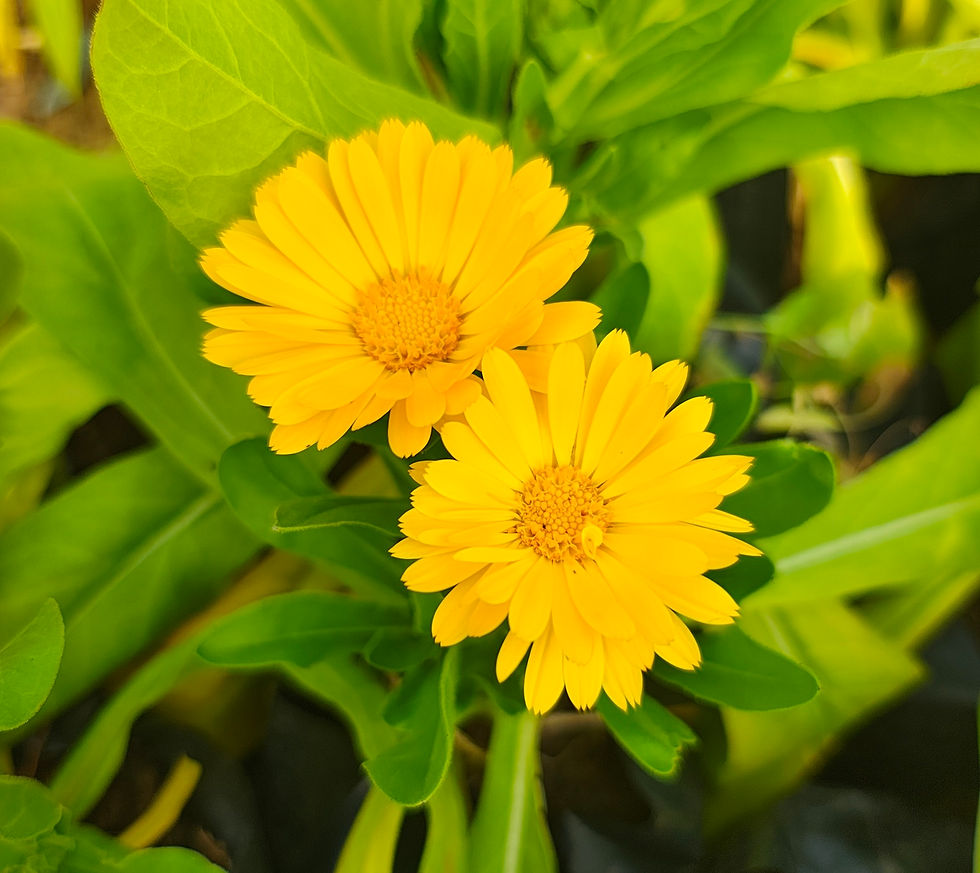
The Flower Head: Commercial value is concentrated in the ray florets. These petals contain high levels of triterpenoid esters (anti-inflammatory) and carotenoids (antioxidants), which give the flower its deep orange pigment and therapeutic potency.
2. Global Trade & Market Valuation
The market for Calendula is currently in a "bullish" phase due to the global shift toward "Clean Beauty" and herbal pharmacology.
Market Valuation: The global Calendula extract market was valued at approximately USD 145.7 million in 2024 and is projected to reach USD 245.9 million by 2032, growing at a CAGR of 6.5%.
Top Exporters: India and Egypt dominate global production, followed by Germany and Poland for high-grade medicinal varieties.
Major Importers: 1. United States (Lead Importer)
2. Russia (Second Major Importer/Consumer)
3. Singapore & Indonesia (Key hubs for Southeast Asian processing)
3. International Trade Standards (HS Codes)
For international logistics and customs, Calendula is traded under several specific Harmonized System (HS) codes:
HS Code 1211.90: For dried, crushed, or powdered flowers and plant parts used in pharmacy or perfumery.
HS Code 1302.19: For vegetable saps and extracts (Calendula Oleoresins or liquid extracts).
HS Code 1209.30: For herbaceous plant seeds used primarily for sowing.
4. Ideal Growing Conditions
Success in Calendula farming starts with the right environment. While the plant is notably hardy, achieving industrial-grade quality requires specific conditions:
Climate: Calendula thrives in cool-to-moderate temperatures. The optimal range for growth and flower production is between 15°C and 25°C. Extreme heat can cause the plant to go dormant or reduce the quality of the essential oils.
Soil and pH: It prefers well-drained, loamy soil rich in organic matter. A pH level between 6.0 and 7.0 is ideal for nutrient uptake.
Sunlight: Full sun is essential for maximum bloom count and high resin production.
5. Global Occurrences and Adaptability
Originally native to Southern Europe and the Mediterranean, Calendula has proven to be incredibly adaptable. Today, it has naturalized across the globe, from the temperate regions of North America to the high-altitude plains of Asia. Its ability to grow in diverse ecosystems makes it one of the most versatile crops for sustainable agriculture worldwide.
6. Professional Farming Methods
For commercial success, precision is key. Professional growers follow a rigorous protocol:
Sowing: Direct sowing is preferred, with a recommended spacing of roughly 25cm to allow for proper air circulation and to prevent fungal issues.
Harvesting: To encourage continuous blooming, flowers should be hand-picked every 2 to 3 days during the peak season.
Post-Harvest Processing: To preserve the vibrant color and the delicate bioactive compounds (triterpenoids and flavonoids), the flowers must be dried in shaded, well-ventilated areas. Direct sunlight during the drying process can bleach the petals and degrade their medicinal value.
7. Commercial and Medicinal Significance
Why is the demand for Calendula skyrocketing? It comes down to its chemical profile.
Medicinal Power: Calendula is rich in antioxidants and anti-inflammatory agents. It is clinically recognized for its ability to accelerate epithelialization—the process of skin repair. This makes it a staple in pharmaceutical-grade wound-healing ointments.
Economic Value: In the "clean beauty" and organic skincare sectors, Calendula is a premium ingredient. It is used in everything from high-end facial oils to dermatological creams for sensitive skin. For farmers, it offers a high-yield-per-acre ratio and multiple harvests per season, making it a highly profitable "cash crop."
8. Industrial Processing & Technology
Transforming raw Calendula into a commercial-grade product requires precision technology to prevent the degradation of bioactive compounds:
Dehydration Tech: Large-scale operations use Industrial Screen Dryers or Low-Heat Air Flow Chambers. Maintaining temperatures below $40^{\circ}\text{C}$ is critical to preserving the essential oils.
Supercritical CO2 Extraction: The "gold standard" in processing. This high-tech method uses pressurized Carbon Dioxide to extract pure, solvent-free oils and resins, ensuring the highest potency for premium skincare.
Ultrasonic-Assisted Extraction (UAE): A "green" technology using sound waves to break plant cell walls, increasing yield while reducing solvent use.
9. Major Commercial Applications
Calendula serves as a primary Raw Material for:
Dermatological Ointments: Used in professional wound-healing and post-surgical recovery creams.
High-End Cosmetics: A staple in luxury soothing toners, facial oils, and "baby-safe" skincare lines.
Functional Foods: Used as a natural, health-promoting colorant in the food and beverage industry.
In a global market where chemical potency and genetic purity determine price, your choice of planting material is your most important investment.
VR International is recognized as a genuine source for high-quality, high-yield Calendula planting material. We provide seeds and starts that are genetically verified for maximum resin production, ensuring that your harvest meets the stringent standards of the international pharmaceutical and cosmetic buyers.
Partner with VR International to bridge the gap between sustainable farming and global commercial success.

Comments